• The Las Palmas de Gran Canaria International Film Festival has programmed screenings aimed at children and young people during the two weekends of the event
• A short-film selection will take seven Hungarian pieces to the big screen, four of them being Spanish premieres
Las Palmas de Gran Canaria, April 13, 2026.- The Las Palmas de Gran Canaria International Film Festival will once more dedicate a part of its two weekends to screenings aimed at children and young people. Thus, in this 25th edition of the film event, Magic Lantern: Family Time will offer three extraordinary journeys through time and space in which short films shall play a major role.
They will begin on the rugged English coast with Mary Anning (Switzerland, Belgium, 2025, 72 min.) by Marcell Barelli. According to this edition’s catalogue, in Barelli’s animation film the “paleontologist Mary Anning changed the way we understand our past with her fascinating discoveries about the world of dinosaurs.” Set at the beginning of the 19th century, this story stars a curious and lively twelve-year-old girl who travels the coast in search of fossils, a passion she has inherited from her father. After his sudden death, the family is left in dire straits, and Mary sets out to decipher an enigmatic drawing he left behind. In her quest, the young girl opens herself up to new relationships and discoveries that will mark her first steps in the study of the remnants of the past.
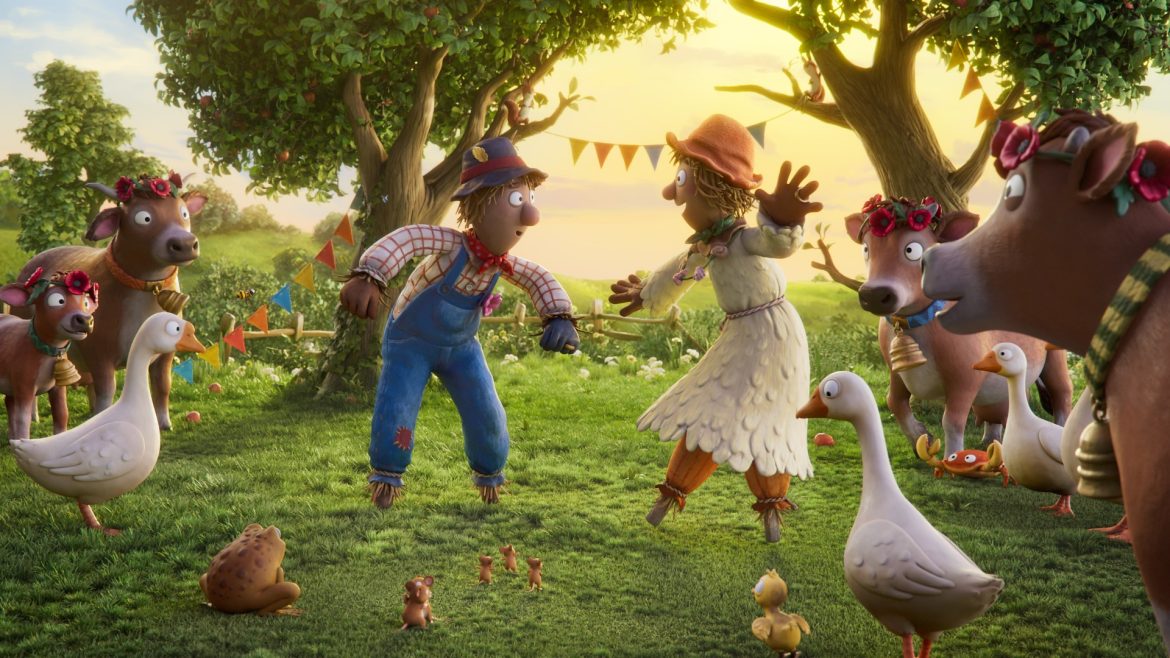
The next stop within Magic Lantern: Family Time invites us to dress up for La gran fiesta del bosque, an animated gem based on the universe of Julia Donaldson, the most emblematic children’s author in the United Kingdom. This medium-length film (2026, 54 min.) brings together several short films coming from the United Kingdom, Denmark, France, Switzerland and Germany starring farm and forest animals. Set in a natural environment, these stories focus on care, coexistence, and mutual support. Among them, and as the central story, is The Scarecrow’s Wedding, in which Betty O’Barley and Harry O’Hay, two scarecrows, decide to organise a celebration with the help of the rest of the forest. Additionally, through the other tales of The Cow, Kiko et les animaux, Forever Seven, and Nuttissimo, the film highlights everyday bonds and gestures of generosity, companionship, and community.
Finally, a short-film selection made by the legendary Hungarian school during its golden age, when the country was known as Europe’s great Disney factory, will be the third extraordinary journey offered by LPAIFF’s family section.
This selection, a 53-minute movie marathon composed of seven different stories, will begin with Animalia (1977, 6 min.) by Tibor Hernádi and István Majoros. In this ironic and disenchanted portrait of the implacable and ridiculous logic of nature, a group of animals, driven by instinct, find themselves caught in situations as absurd as they are comical. This piece will premiere in Spain as part of the Festival.
The following innovative short film will be The Fly (1980, 3 min.) by Rófusz Ferenc. The first Hungarian film to win an Oscar in 1981, it marked a turning point in the way the body and terror were portrayed. In it, a man’s routine is disrupted when a fly enters his personal space.
Another Spanish premiere screening at Cine Yelmo Las Arenas will be The Naughty Owly (1969, 8 min.) by Gyula Macskássy and György Várnai. This animated film tells the story of a family of little owls who live in a tree hole.
The third premiere included in Magic Lantern: Family Time will be The Greedy Bee (1958, 16 min.) by Gyula Macskássy. In this work, composed of electronic sounds and buzzing, a selfish bee hoards all the honey while the rest work tirelessly, unaware of the danger that lurks.
There will also be a fourth short film coming from Hungary to premiere in Spain as part of the LPAIFF, Green Warnings for Every Day (1992, 5 min.) by Sándor Reisenbüchler. This pulsating collage animation, interwoven with elements of folk art, delivers a warning about the dangers of extinction, linking a different organism to each day of the week.
The sixth short film will be The Mouse and the Lion (1957, 10 min.), also by Gyula Macskássy. With a didactic approach, this modern adaptation of Aesop’s fable tells the story of a lion that saves a tiny mouse from a vulture, but then gets trapped in a net, and the mouse returns the favour.
Wizards (1985, 5 min.) by Dóra Keresztes and István Orosz, will close the Hungarian short-film selection. The piece, built around ancient magic spells, the morphing of figures structured in continuous, pulsating rotations, and the intense use of color, can be considered the equivalent of poetry’s compressive power.
All these different stories the Festival brings to its family audiences will be shown at Cine Yelmo Las Arenas throughout the two weekends of the film event with Spanish dubbing.
Share this Post